 Oil
Oil
 Watercol
 Digital
 Sculpture
 Performance
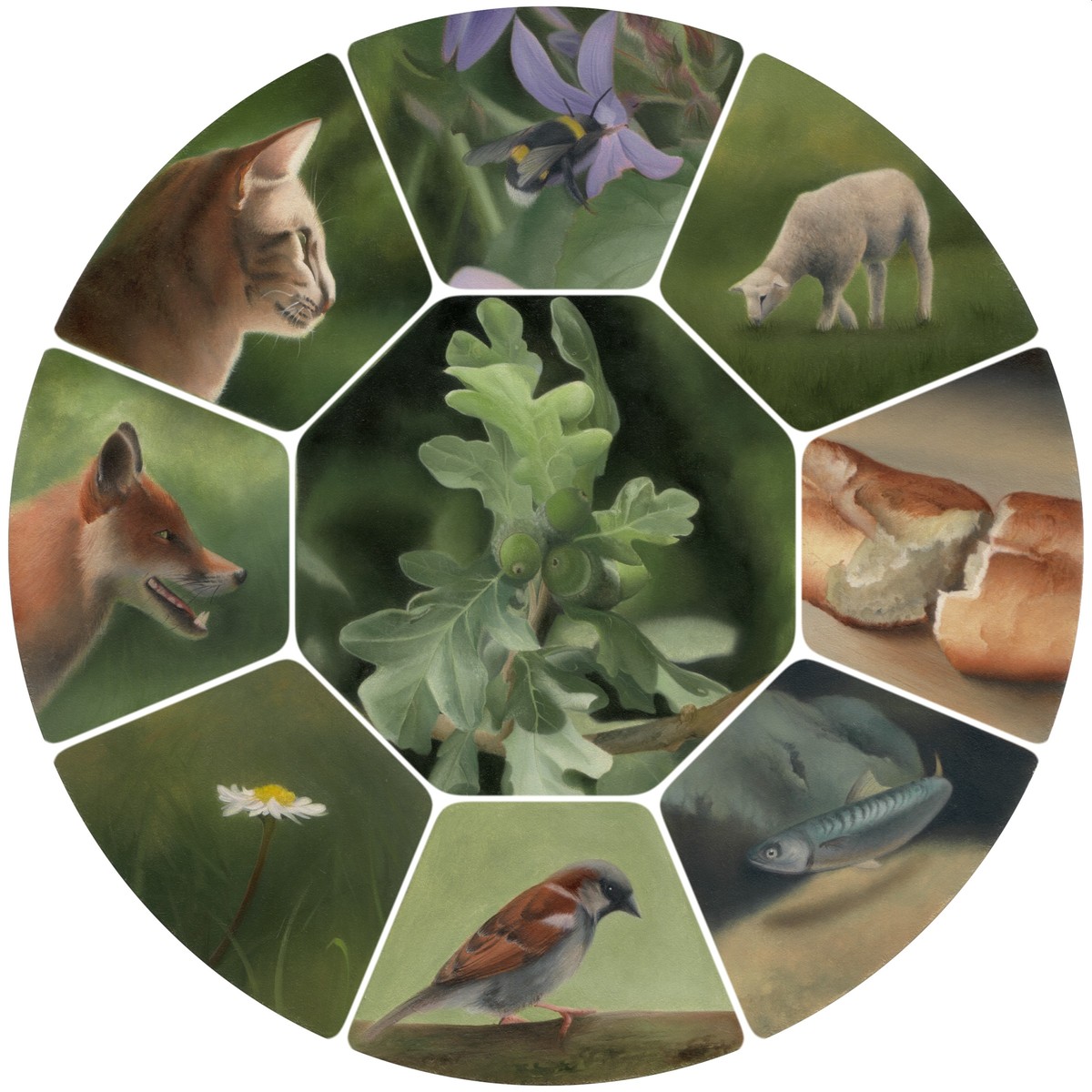
G634A Monstrance of Life
Oil on panel, oak, marble, plaster, gold
May 2013 to May 2014, Size 520x570x200 mm

|
|
|
|
G634A Monstrance of Life
Oil on panel, oak, marble, plaster, gold May 2013 to May 2014, Size 520x570x200 mm |
|
|
|
|
|
About this painting
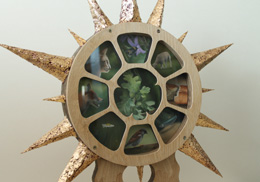
A monstrance is an elaborate sculptural form used in Roman Catholic churches for the display on an altar of some object of piety, such as a holy relic or the host (sacramental bread). These are typically, today, shaped like the sun. I wanted to make an artwork that venerated nature using a similar artifact, to evoke a feeling of a sort of secular or humanist appreciation of the natural world, and life itself; something of the feeling evoked by Beethoven's Pastoral Symphony.
I chose elements of life to serve this: a bee; a lamb; bread (here perhaps with a nod to the Christian origin of the work; but the fresh crusty French loaf also evokes a feeling of the new, innocent morning, a good mood). A fish (mackerel); a house sparrow; a daisy; a fox; a cat, and in the centre an oak cluster with acorn, an archetypical representation of nature. I wanted to use natural materials as much as possible, and the box itself is made from solid European oak, partly to complement the oak-leaf cluster in the centre. The wooden divider on the surface is 3mm MDF with oak veneer, which is counter-intuitively more expensive than solid oak if the same size. Oak has a flaky and at times dry texture, it's of course a very hard wood. This makes thin sheets of wood structurally unreliable, so a veneered part seemed ideal. The circular glazing is Perspex (acrylic), partly for safety reasons on this heavy piece. The nine paintings are painted on a single circular panel of 3mm MDF to exactly fit the design. As it typical in my technique, they are painted in two layers of oil paint; an opaque base layer and a transparent glaze layer which incorporates a minute amount of amber. The outer spikes are hand sculpted in a mix of plaster and paper fibres to create a rough texture, which I knew would lend itself well to gilding. One art of gilding is letting some of the cracked gold leave holes to reveal the background colour. Here a blood red, a common base for gilding was used. The gold is 23.5kt gold leaf by Wrights of Lymm. |
|
Technical details
The circular cabinet can be wall mounted or rest on a shelf or table top using a removable base made from oak and marble. As objects of reverence, monstrances often have legs or a support for standing upon an altar, though often with one leg which can serve as a handle for carrying or parading.
|
|

|

|

|